
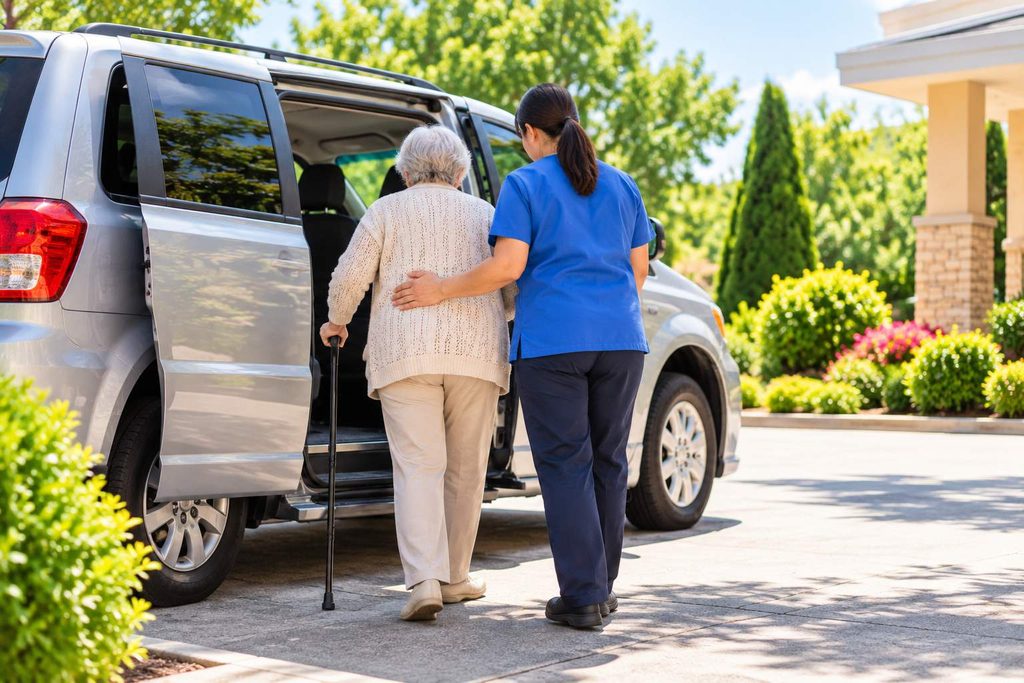
Choose transportation support when a loved one’s ability to drive, navigate travel, or safely enter and exit a vehicle no longer matches their daily needs.
Paoli, IN home care services can help families think beyond the ride itself. Getting to an errand, activity, or appointment may also involve finding shoes and a coat, using a walker, remembering the plan, waiting safely, and settling back in at home afterward.
A person does not need to give up every part of their independence before support makes sense. In fact, arranging help early can prevent a smaller concern, such as avoiding unfamiliar roads or struggling with a vehicle door, from turning into missed activities and growing isolation.
Option One: Relying on Family, Friends, or Informal Rides
Familiar rides can be a good fit when trips are occasional and the person can get ready, transfer into the vehicle, and manage most of the outing with little help. A relative or friend may also know the person’s routines, preferences, and communication style well.
The limitation is consistency. Recurring rides can become hard to coordinate around work, school, weather, and other responsibilities. Family caregivers may start rearranging their own schedules each week, then feel stressed or guilty when they cannot be available.
This approach usually suits an older adult with steady mobility and reliable informal support nearby. It becomes less practical when rides are frequent, the loved one needs hands-on help getting in and out of the vehicle, or a family member must stay throughout the outing.
If transportation is creating tension at home, it is worth addressing before important activities are routinely skipped. Families can also review tips for choosing personal care services in paoli in area when considering broader daily support.
Option Two: Community or Public Transportation Resources
Community transportation may work well for adults who can follow a schedule, manage a pickup location, and travel with limited assistance. Before relying on it, check the practical details that shape whether it is truly a safe fit:
- Route Access: Confirm whether pickup and drop-off locations serve the places your loved one actually needs to go.
- Timing: Ask how far ahead rides must be arranged, whether pickup windows are broad, and what happens if an outing runs late.
- Weather Readiness: Consider whether the person can wait outdoors or in a public area during rain, cold, or heat.
- Mobility Needs: Ask whether the vehicle can accommodate mobility aids and whether the rider can safely board and exit with the help available.
- Accompaniment: Determine whether someone needs to travel with the person, meet them at the destination, or help them return inside afterward.
Community resources can be useful for predictable trips. They may be a poor match when a person becomes confused in unfamiliar settings, cannot tolerate long waits, or needs assistance before leaving home and after returning.
Option Three: Transportation Support Through Paoli, IN Home Care Services
Transportation support through a care provider may be a better fit when the outing includes more than travel. Depending on the provider and care plan, support may include preparing for departure, providing reminders, helping the person move safely to and from the vehicle, accompanying them during the outing, and helping them get settled afterward.
This can help with errands, social visits, community activities, and appointments. The main benefit is continuity: the trip is considered as part of the person’s whole day, not as a separate task with a curbside pickup and drop-off.
Ask prospective providers exactly what transportation-related support they can provide. Important questions include whether they can coordinate recurring schedules, whether accompaniment is available, how they handle wait time, and what support can be provided at the destination and back at home.
Elite Personal Care LLC can be part of that conversation when your family is trying to connect transportation needs with a workable daily routine.
Factors That Matter More Than the Ride Itself
- Vehicle Transfers: Can your loved one stand, pivot, sit, and buckle in without unsafe strain or rushing?
- Mobility Aids: Will a cane, walker, wheelchair, or other aid need to travel with them, and can it be handled safely?
- Cognitive Changes: Do they remember the destination, recognize when it is time to leave, and stay oriented during delays?
- Reminders: Will they need prompts for keys, glasses, a phone, paperwork, or weather-appropriate clothing?
- Wait-Time Tolerance: Can they remain calm and safe if pickup or return plans change?
- Weather Concerns: Do rain, ice, darkness, or extreme temperatures make getting in and out of the vehicle harder?
- Frequency: A monthly ride may be manageable for family, while several outings each week may need a more dependable plan.
- Before-And-After Help: Consider whether the person needs help with grooming, meals, toileting, locking up, or returning safely indoors.
Avoiding stairs, staying in one room, or refusing outings can be an early sign that travel feels harder than the person admits. Asking about the reason with respect often reveals whether the barrier is confidence, mobility, memory, or fear of falling.
How to Choose the Right Transportation Plan
- List the outings that matter most. Include errands, faith gatherings, visits with friends, routine activities, and appointments. Note how often each one occurs and what happens when it is missed.
- Map the full outing, not just the drive. Write down what your loved one must do from the moment they prepare to leave until they are safely home again. This makes hidden needs easier to spot.
- Match support to the hardest part. Informal rides may cover simple outings. Community transportation may suit scheduled trips with limited assistance. A care provider may be more appropriate when supervision, reminders, accompaniment, or help at both ends of the trip is needed.
- Build a backup plan. Weather, family schedules, and changing needs can disrupt any arrangement. Decide in advance who will step in if a planned ride falls through.
The right plan may combine family help, community resources, and Paoli, IN home care services rather than relying on only one approach. To discuss daily routines, mobility concerns, accompaniment needs, and how transportation can fit into a broader support plan, contact our team for personalized home care guidance at Elite Personal Care LLC at (812) 675-0384.